
























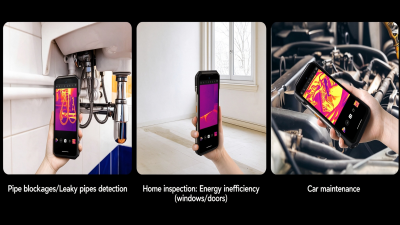
It hasn't rained in weeks. The air is crisp, the windows are dry, and there is a new grey bloom in the corner of the bedroom ceiling. Most people reach for the bleach spray and move on.
I'd reach for a thermal camera first. Mold that appears in dry weather is rarely new trouble. It is old water finally showing itself, and wiping the stain does nothing about the water.
Why Mold Shows Up After the Rain Stops
Summer storms and humid air push moisture into places you never see: insulation, the back of plasterboard, the gap under a floor. A run of sunny days dries the surface. It does not dry the inside of the wall.
Then autumn arrives and the nights turn cold. The gap between daytime and night-time temperatures widens, and the leftover vapour inside the structure condenses on the coldest surfaces it can find. Those are usually thermal bridges, such as outside corners, window surrounds and the line where wall meets ceiling. Call it delayed mold: the wetting happened in July, the stain turns up in October.
The Stain Is the Symptom
The US Environmental Protection Agency is blunt on this point: moisture control is the key to mold control, and if you clean the mold without fixing the water problem it will most likely come back. Its guidance is to dry water-damaged areas within 24 to 48 hours.
That window works for a burst pipe. Slow autumn condensation gives you no such alarm. The wall looks and feels dry while the timber, wallpaper backing or insulation behind it stays damp enough to feed mold. This is why the same patch gets repainted three times. Nobody found where the water was.
How a Thermal Camera Finds Water It Can't See
A thermal camera does not detect water or mold. It shows surface temperature, and damp material gives itself away in two ways. Evaporation cools it, so a wet area usually reads a little colder than the dry wall around it. Wet material also warms up and cools down more slowly than dry material, so it stands out when the room temperature changes.
The differences are small, often a degree or two. Your hand will not feel them. A thermal sensor will, and it draws the outline of the damp area on your screen.
A Six-Step Damp Hunt
1.Pick your moment. Scan early in the morning or in the evening, when the building is changing temperature. With the heating on and a cold night outside, contrast is at its best.
2.Start at the stain, then look past it. Scan the moldy patch and follow the cold shape outward. Water travels. A ceiling stain often traces back to a spot a metre or more away, such as a roof penetration or a pipe run in the attic.
3.Check the usual suspects. Below and beside windows, outside corners, ceilings under bathrooms and attics, walls that back onto showers, and the bottom 30 cm of ground-floor walls.
4.Read the shape. A leak tends to make an irregular blotch with a darker core, often trailing downward. Condensation at a thermal bridge makes a tidy cold line along a corner or lintel. A draft makes wispy streaks from a gap.
5.Confirm with a moisture meter. A cold patch is a suspect, not a verdict. Missing insulation looks cold too. Press an inexpensive pin or pinless moisture meter on the area and on a dry reference spot. If the reading is clearly higher, you have found your water.
6.Photograph, fix, re-scan. Save a thermal photo before the repair. Once the source is fixed and the area has had time to dry, shoot the same spot under similar conditions. If the cold patch is gone, so is the damp.
What to Do with What You Find
Pattern on screen Likely source Next step
Blotch on a ceiling, spreading from one side Roof or plumbing leak above Inspect the attic or the room above; call a roofer or plumber
Cold zone under or beside a window Failed window seal or flashing Re-seal outside, check the sill, dry the wall
Thin cold line in a corner or along a lintel Thermal bridge condensation Improve ventilation, lower indoor humidity, consider insulating
Cold band along the base of a wall Rising damp or a slab leak Get a damp specialist to assess
Cold patch behind a wardrobe or bed Trapped air and condensation Move furniture off the wall, ventilate
If mold covers a large area, or the water came from sewage, bring in a professional rather than cleaning it yourself.
Why Do It with a Phone
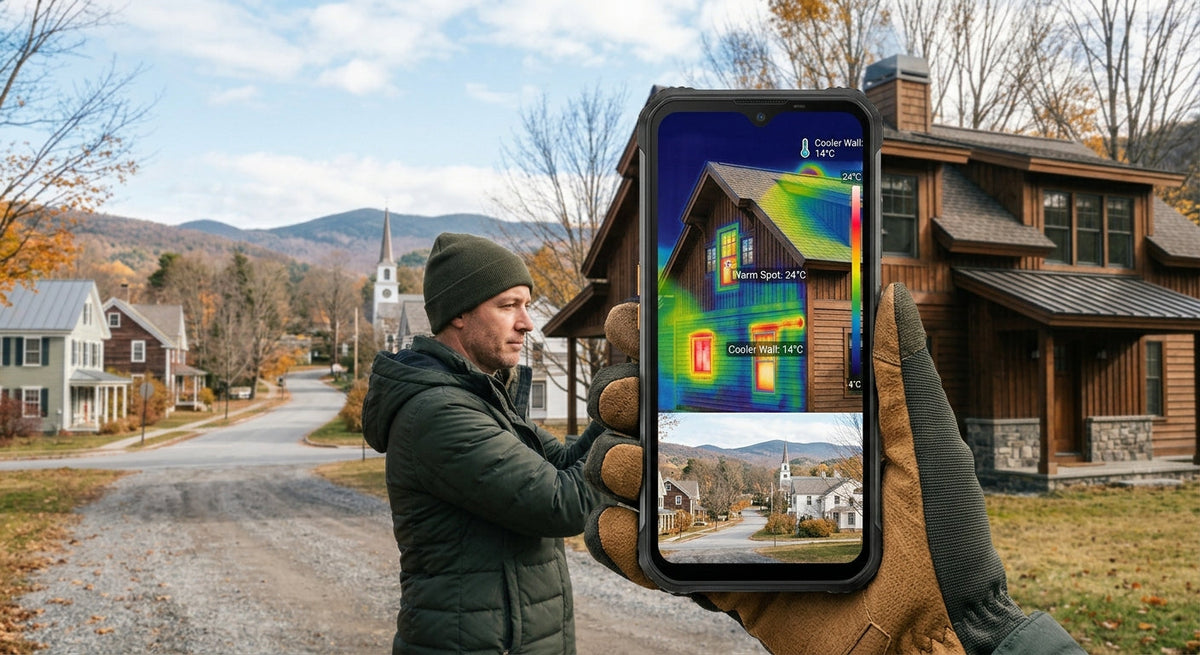
A dedicated thermal camera does this job well. It also lives in a drawer. A phone is in your pocket on the day you notice the stain, and again three weeks later when you want the re-scan.
Seven Ulefone models have thermal imagi




Dejar un comentario
Todos los comentarios se revisan antes de su publicación.
Este sitio está protegido por hCaptcha y se aplican la Política de privacidad de hCaptcha y los Términos del servicio.