






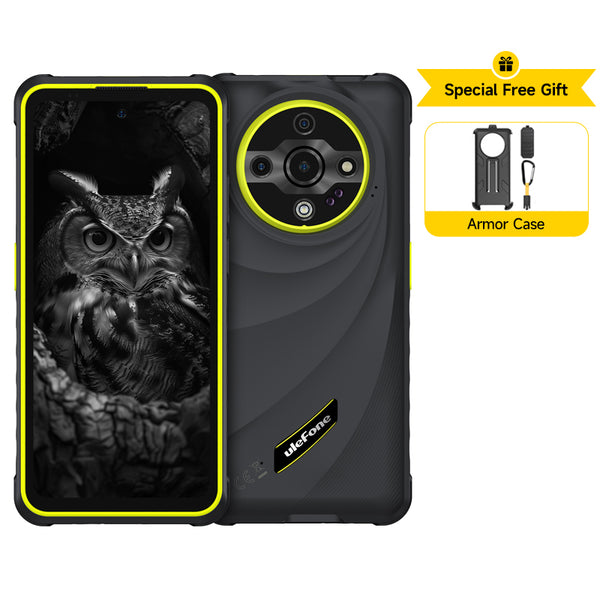
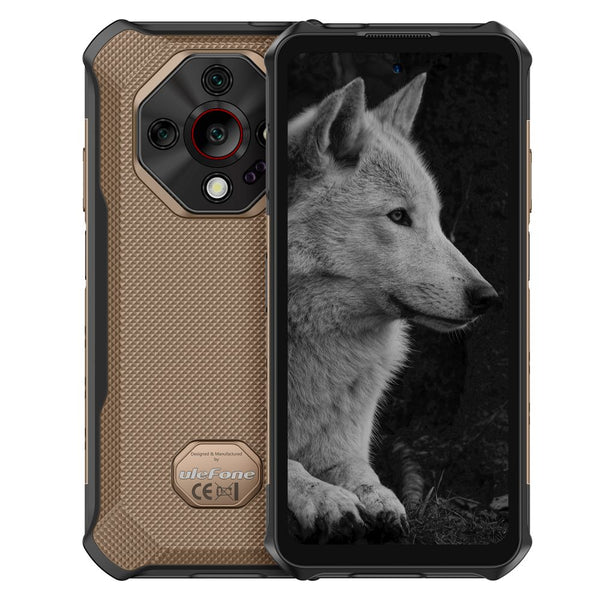
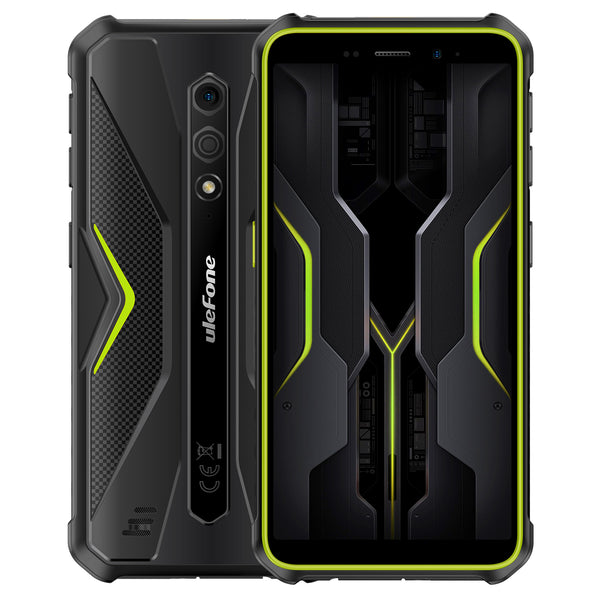
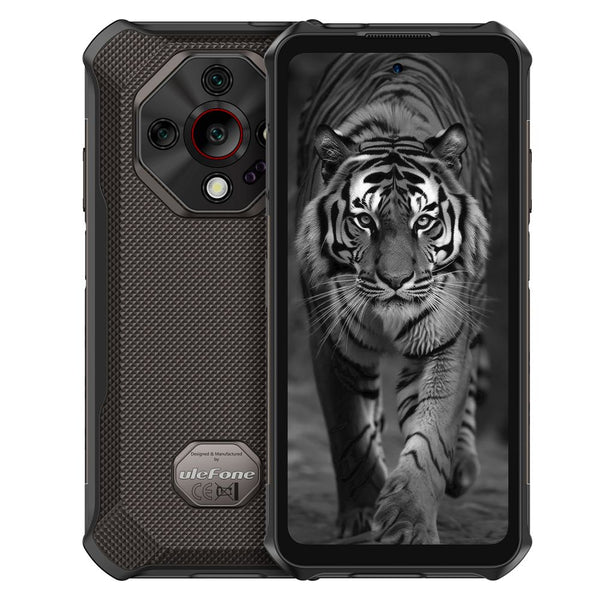










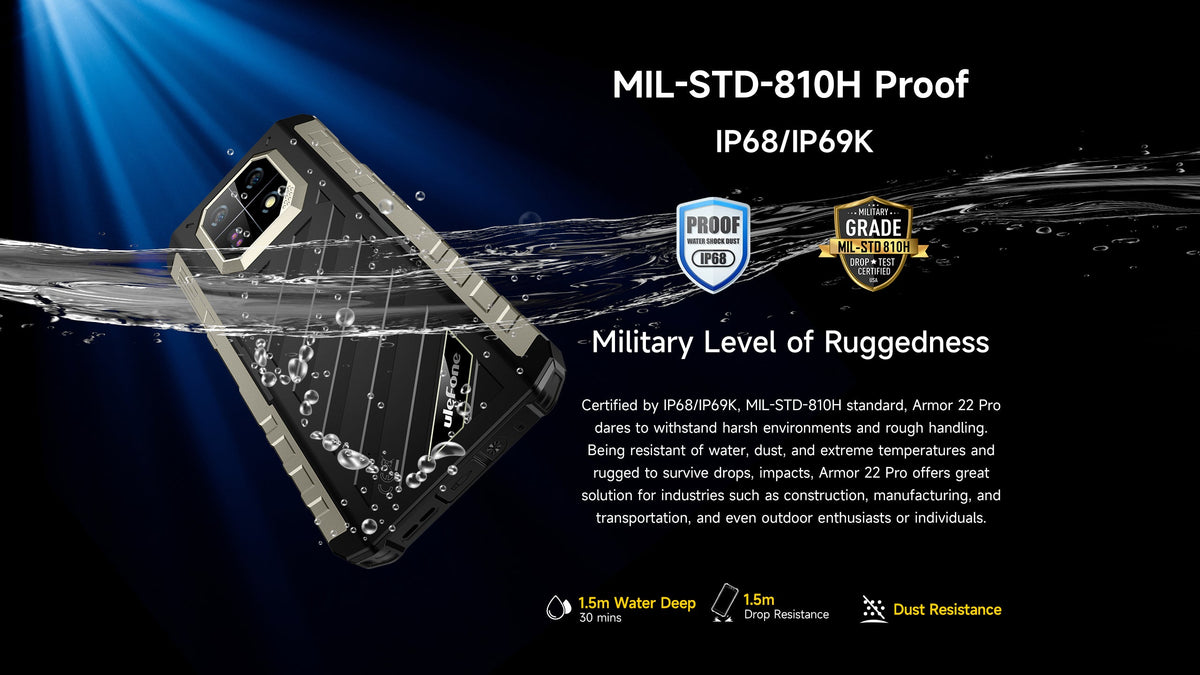
Search for a military phone and you'll get a wall of product pages all claiming the same thing: military grade, mil-spec, built for combat. Strip away the marketing and a military mobile phone is usually just a rugged phone with a green paint job and a test certificate. That's not automatically a bad thing — but it's worth understanding what the label actually means before you pay for it.
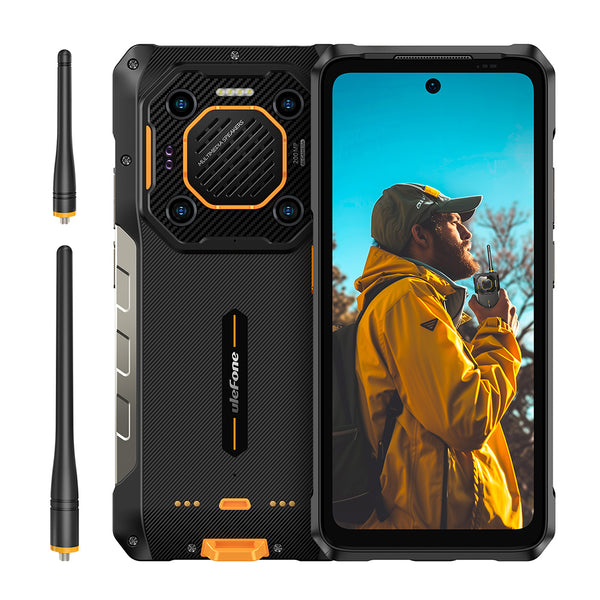
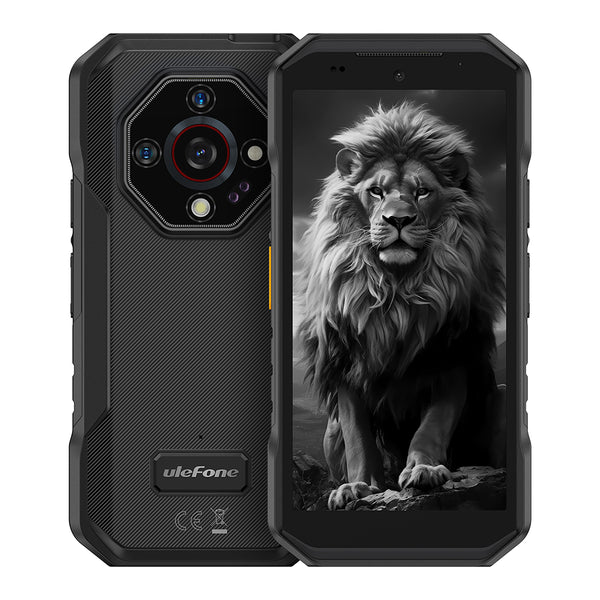
The short version: a military phone is a phone that was tested against a set of military test standards, and the ones worth buying bring more than the certificate. They bring the field features that matter when you're away from a desk — dual SIM support, long battery life, a night vision camera, a light you can actually work by. That's exactly the space Ulefone's Armor 22 Pro and Armor 24 Pro live in, so let's take them apart properly.
What a Military Phone Actually Means
The term "military phone" gets thrown around loosely, but there's a specific standard behind it: MIL-STD-810H, a set of military test methods for toughness developed by the US Department of Defense. Ulefone's military phone models carry MIL-STD-810H certification along with IP68/IP69K water and dust ratings.
MIL-STD-810H vs IP68/IP69K: What Each Rating Covers
These two ratings answer different questions, and it helps to keep them separate. The IP rating deals with water and dust: IP68 covers submersion under stated conditions, while IP69K adds resistance to high-pressure, high-temperature water jets. MIL-STD-810H is the military test framework — a library of environmental test procedures covering temperature extremes, humidity, shock, vibration, rain, sand and dust, with manufacturers selecting which procedures apply to each model. A field phone benefits from both: one rating covers how it handles water and dust, the other how it handles the environment.
What a Phone for Military and Emergency Teams Actually Needs
Start with the phone military and emergency teams actually carry, and the spec sheet looks different from a flagship ad. The durability cert is table stakes; the real list goes further:
- **Dual SIM and expandable storage.** Two Nano SIMs let you split work and personal lines, or run two carriers where one has no signal. A microSD slot solves the "storage full mid-job" problem.
- **Long battery life.** Field shifts don't end when the battery hits 20%. A phone that outlasts a full day is a tool, not a liability.
- **A camera that works at night.** A dedicated night vision camera turns darkness into a usable work condition for security checks and site inspections.
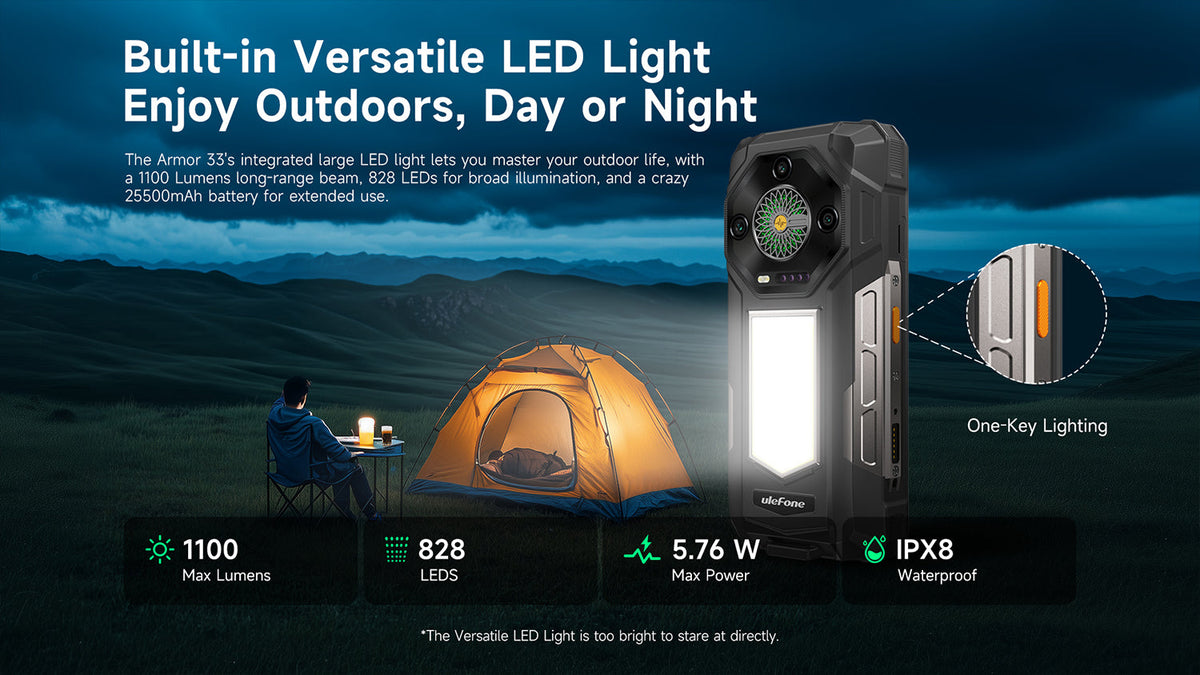
- **A real light.** An LED array bright enough to inspect equipment or signal in the dark — not a screen-flash "torch."
- **Gloves mode and wet-condition operation.** When it's cold or raining, these keep the phone usable.
A phone military and emergency crews can count on checks those boxes, and the two phones below were built around exactly that list.
Military Phone Comparison at a Similar Price
Here's how the two Ulefone models sit against a similarly-priced competitor currently on sale at an official store — for anyone comparing military mobile phone options, the table keeps the numbers straight:
|
Model |
Price |
Screen |
Battery |
Weight |
Main camera |
Protection |
|
Ulefone Armor 22 Pro |
$239.99 |
6.58" 120Hz |
6600mAh |
324g |
64MP + 64MP night vision |
IP68/IP69K, MIL-STD-810H |
|
Ulefone Armor 24 Pro |
$359.99 |
6.78" 120Hz |
22000mAh |
647g |
64MP + 64MP night vision |
IP68/IP69K, MIL-STD-810H |
|
OUKITEL WP300 5G |
$419.99 |
6.58" |
16000mAh |
510g |
108MP |
IP68/IP69K |
The WP300 5G offers a bigger battery than the 22 Pro and a higher-res main sensor, but it's $60 more than the 24 Pro, weighs 510 grams, and doesn't bring the 1000-lumen light or the uSmart expansion. Between the two Ulefone models, the decision is mostly battery versus weight: carry the 22 Pro daily, or carry the 24 Pro when power is the scarce resource.

Armor 22 Pro: The Lightweight Field Phone
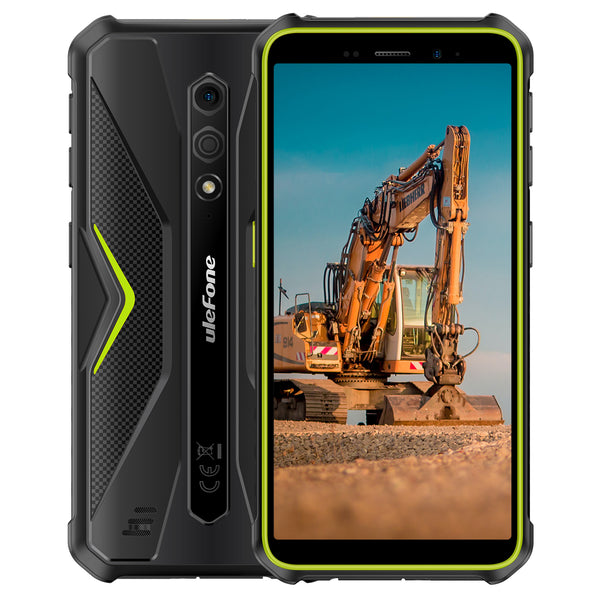
At $239.99 (regular $269.99), the Armor 22 Pro is the entry point into Ulefone's military-style lineup, and it's the one I'd call a daily field phone. It's comparatively light for a rugged phone at 324 grams, with a 6.58-inch FHD+ 120Hz display at 450 nits of brightness.
Under the hood: a MediaTek Helio G200 octa-core processor (6nm, up to 2.2GHz), 8GB RAM with up to 256GB storage and microSD expansion to 2TB. The camera pair is 64MP main (Sony IMX682, f/1.89) plus 64MP night vision. Battery is 6600mAh with 33W charging. It runs Android 16, has IP68/IP69K and MIL-STD-810H protection, and keeps useful field touches like the IR blaster, NFC, gloves mode, and underwater camera mode.
At this price, you're getting genuine MIL-STD-810H certification, dual SIM support, a usable night vision camera, and microSD expansion in a package that doesn't feel like a brick. If your job regularly goes two or three days without power, the 24 Pro is the better match — that's what its battery is for.

Armor 24 Pro: The 22,000mAh Mission Phone
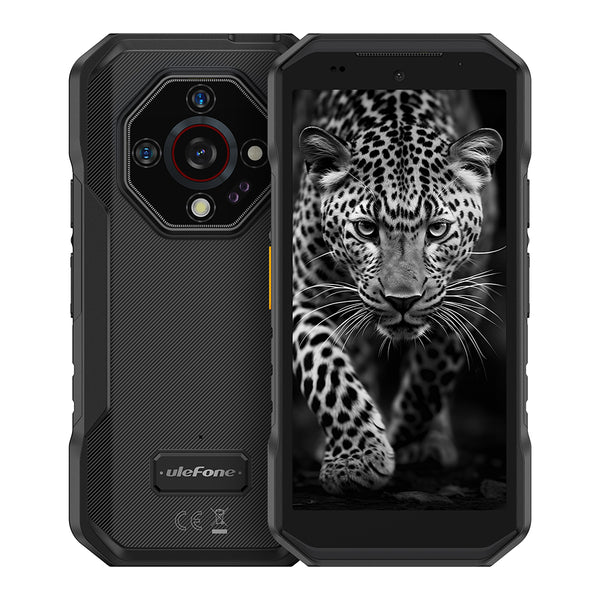
At $359.99 (regular $409.99), the Armor 24 Pro is the heavy-duty end of the pair, and the battery is the story. 22,000mAh is a serious number — Ulefone rates it for up to 100 hours of talk time and 1300 hours of standby, with 66W charging and 10W reverse charging so it can top up other gear in the field.
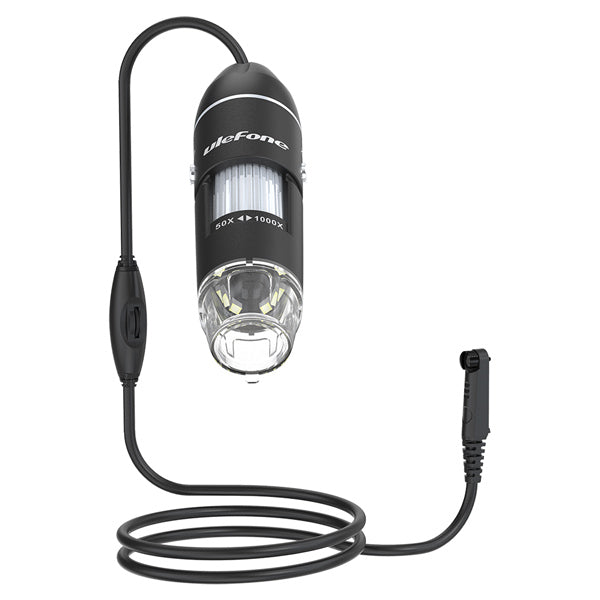
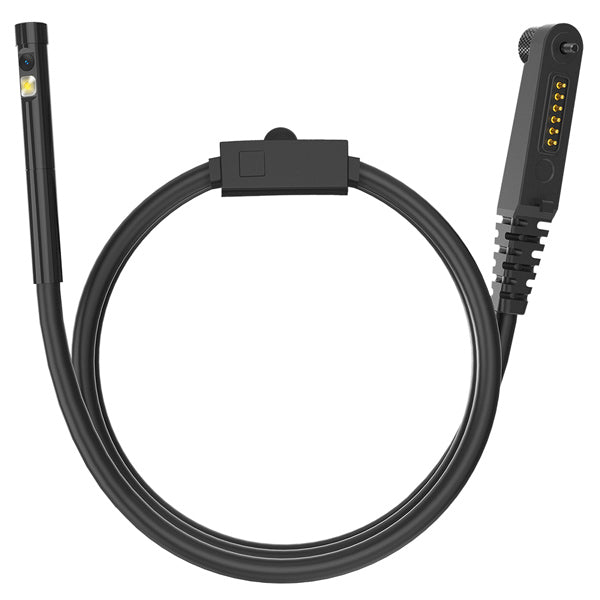
Everything else scales up to match. A 6.78-inch FHD+ 120Hz display (460 nits), the same Helio G200 platform with 12GB RAM and 256GB storage expandable via microSD up to 2TB, and the dual 64MP camera system with night vision. The 1000-lumen LED array with 512 beads doubles as a work light or emergency signal, and the uSmart port connects professional accessories. It runs Android 16, and protection is IP68/IP69K plus MIL-STD-810H, with Gorilla Glass 5 on the front.
This is a mission phone built for days away from power — when the job keeps you off the grid, it's the one that keeps going. If your day always ends near a charging point, the 22 Pro covers the same ground for less money; the 24 Pro earns its keep when power is genuinely scarce.
Quick FAQ
**Is a military phone actually issued to the military?**
No. MIL-STD-810H is a test standard, not a procurement list — "military-style" is the honest description for consumer rugged phones like these. Field units may use rugged phones, but the badge on the box isn't the same as a service contract.
**Which tests does MIL-STD-810H cover?**
It's a library of environmental test procedures — low and high temperature, humidity, shock, vibration, rain, sand and dust — and manufacturers choose which procedures a given model is tested against. Knowing which procedures were selected matters more than the badge alone.
**Is a protective case enough instead?**
A case helps a normal phone, but it doesn't add dual SIM slots, a night vision camera, a work light, or gloves mode. An integrated rugged build covers the same ground without the extra bulk to manage.
The Bottom Line
A military phone is only worth the money if the durability certificate comes with field features you'll actually use. The Armor 22 Pro gives you MIL-STD-810H protection, dual SIM, night vision, and a sane weight at a $239.99 price point. The Armor 24 Pro trades weight for a 22,000mAh battery and a proper work light — the phone you want when power is the scarcest resource on the job.
If you're deciding between them: pick the 22 Pro for everyday field work, pick the 24 Pro for multi-day missions. Either way, you're getting a phone that treats "military-grade" as a starting point, not the whole story.


Laisser un commentaire
Tous les commentaires sont modérés avant d'être publiés.
Ce site est protégé par hCaptcha, et la Politique de confidentialité et les Conditions de service de hCaptcha s’appliquent.