


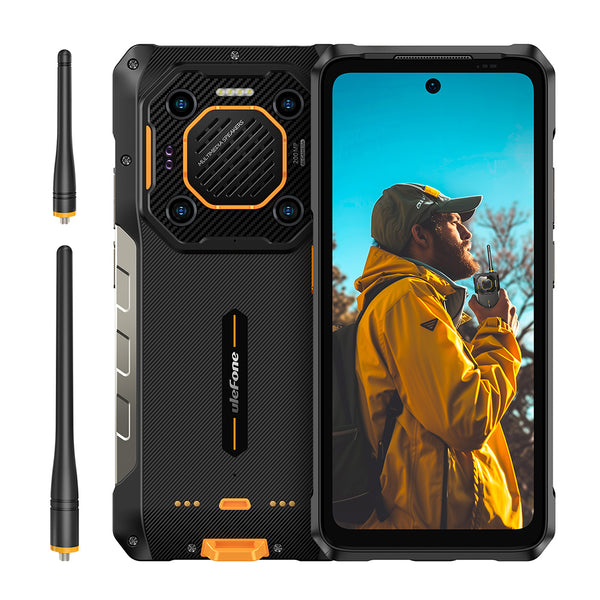




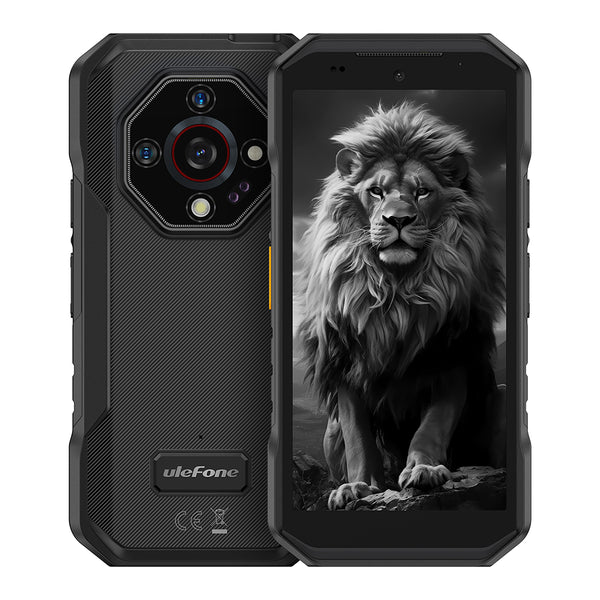










I pack my phone the same way I pack a headlamp or a power bank — it has to earn its place in the bag. That's the difference between an ordinary phone and an outdoor phone. A weekend campout, a trail day, a fishing trip: if the phone dies, cracks, or refuses to work in the cold and damp, it's not gear, it's a liability. After a lot of trail miles with both kinds, here's what actually matters in an outdoor smart phone, and the two rugged outdoor phone models I'd carry this year.
What Makes an Outdoor Smart Phone
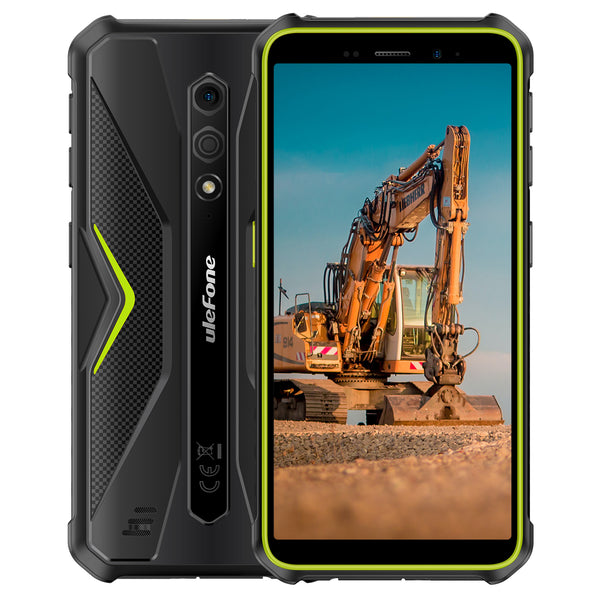
Start with the basics, because everything else builds on them. An outdoor smart phone needs real dust and water protection — IP68/IP69K level, not a splash-resistant coating. It needs drop protection that assumes you'll set it down on a rock or knock it off the tailgate. And it needs military-standard testing (MIL-STD-810H) so the "tough" claim is backed by a lab, not a brochure. A normal phone in a case isn't the same thing: the case adds grip and a little drop protection, but the ports stay open, the battery stays small, and the speaker stays ordinary.
Battery is the next non-negotiable. Out there, you're not charging at lunch. A phone with 10,000mAh-plus means the phone outlasts the day trip; 20,000mAh and up means it outlasts the whole weekend. That changes what you pack — no separate power bank, and one less thing to forget.
Then come the tools you only find on rugged outdoor phones. An LED light bright enough to light up a campsite. A night-vision camera for spotting animals in the dark. A loud speaker so music or calls work over wind and camp noise. Dual SIM so you can run a local travel SIM and your home number at once. These aren't gimmicks — they're the difference between carrying three gadgets and carrying one.
Four Things an Outdoor Smart Phone Needs
When I'm choosing an outdoor smart phone, I run the same mental checklist every time.
**Power.** Battery capacity and charging speed. Can it get me through two days without a charger, and does a short top-up actually add serious runtime? This is the spec I look at first, always.
**Light.** Real-world brightness and use. A work-light LED with several modes beats a single weak flashlight every time. If there's a warning-light mode for emergencies, even better.
**Camera, especially in the dark.** A night-vision camera is genuinely useful outdoors — wildlife, camp security, finding things in a pitch-dark tent. The sensor quality matters more than the megapixel count.
**Toughness for the environment.** Rain, dust, cold, drops on rocks. The ratings should cover it, but I also check the buttons work with gloves on.
That list has saved me more than once from buying a phone that looks rugged and isn't.
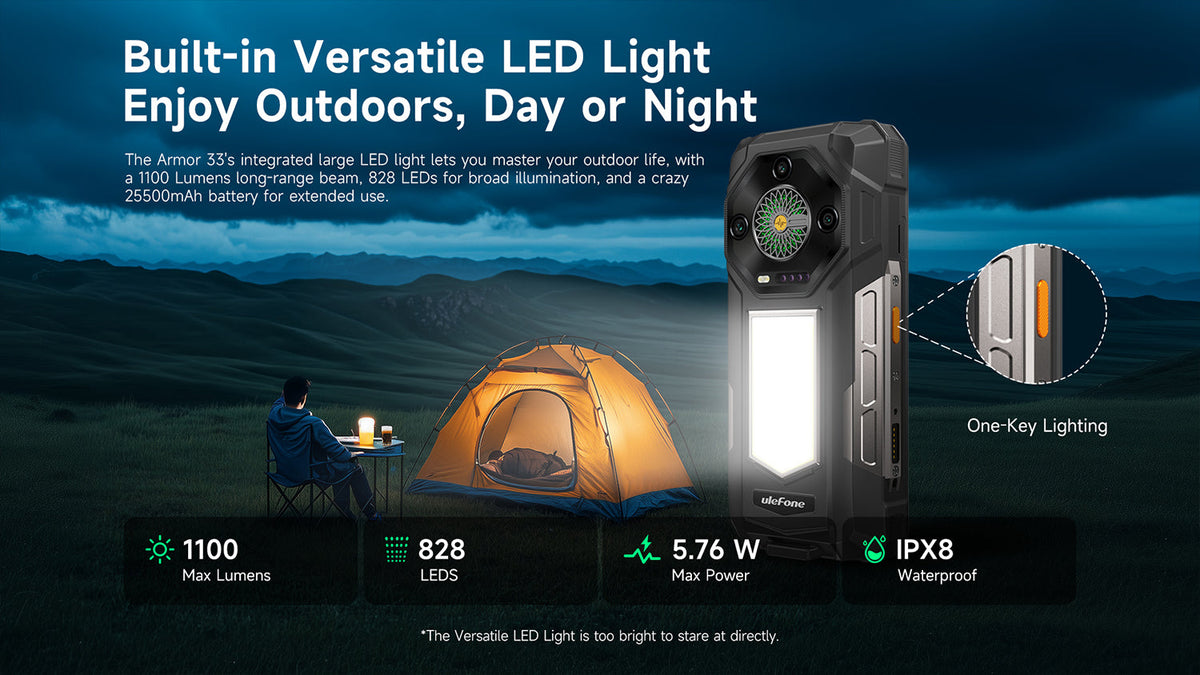
Last fall I spent a long weekend at a lakeside campsite with the Armor 33 and the Armor 29 Pro as my only devices — no power bank, no separate lantern, no speaker. This isn't a lab test; it's just how I used them. The Armor 33's 1,100-lumen LED lit the whole table for dinner, its 118dB speaker covered music while we cooked, and the Armor 29 Pro's warning mode worked as a beacon on a night walk back from the shore. Both batteries still had plenty left when we packed up Sunday, and the phone shrugged off the overnight dew.
Outdoor Phone vs Off-Grid Gear and Swappable Batteries
The questions that keep coming up in outdoor phone searches are about coverage and power: what happens when there's no signal, and what about a removable battery?
Dedicated off-grid communicators solve a real problem — SOS and messaging where there's no cell signal — but they're a separate, specialized device: extra cost, subscriptions, and they don't replace your everyday phone. A rugged outdoor phone with a big battery is not a replacement for dedicated off-grid gear. If you're genuinely heading beyond coverage, you carry both; at a campsite with spotty signal, the outdoor phone is what you'll actually use. When people search for the best phone for camping or hiking, this is the trade-off they're weighing.
On the battery side, there are two schools. Light, serviceable models like the Samsung XCover series let you swap a battery in the field. Big-battery phones like the Ulefone models here take the opposite approach: you don't manage charging at all, you just charge less often. For a weekend with a power source at the car, either works; for multi-day carries where every gram counts, the trade-off is yours to make.
How the Contenders Compare
|
Model |
Battery |
Charging |
Weight |
Price |
Outdoor Highlight |
|
Ulefone Armor 33 |
25,500mAh |
66W |
776.5g |
$429.99 |
1,100-lumen LED + 118dB speaker |
|
Ulefone Armor 29 Pro |
21,200mAh |
120W |
688g |
$599.99 |
Dual AMOLED + large-sensor camera |
|
OUKITEL WP300 5G |
16,000mAh |
45W |
510g |
$419.99 |
108MP camera + camping light |
|
DOOGEE V40 Pro |
8,680mAh |
33W |
382g |
$664.00 |
200MP camera + rear display |
Priced in the same bracket as the Ulefone pair — the OUKITEL WP300 5G lists at $419.99 and the DOOGEE V40 Pro at $664 — the alternatives keep the comparison honest. The WP300 5G is a solid rugged outdoor phone with a 16,000mAh battery, 45W charging, and a 108MP camera, and at 510g it's lighter than the Armor 33, though it gives up the 1,100-lumen LED and the 118dB speaker that make the Armor 33 a one-box camp kit. The DOOGEE V40 Pro is the lightest of the four at 382g, with a 200MP main camera and a rear display, but its 8,680mAh battery and 33W charging are a step behind the Armor 29 Pro's 21,200mAh and 120W. If your trips are short and light, the cheaper options work; if the phone is genuinely part of your kit, the Ulefone models earn the difference.


Two Ulefone Models Built for the Outdoors
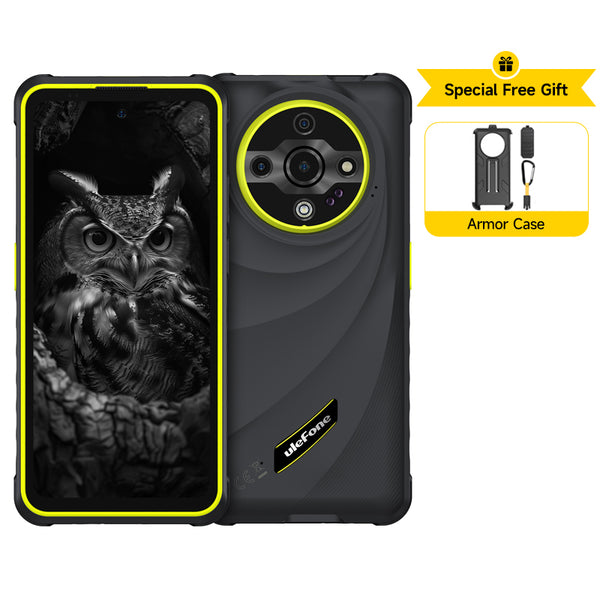
**Armor 33 — the campsite value pick.** The Armor 33 is the rugged outdoor phone that gives you the most for $429.99. The centerpiece is its 25,500mAh battery — endurance that lets you stop planning your day around charging — with 66W fast charging and 10W reverse charging to top up a watch or earbuds in the field. The 1,100-lumen LED (828 LEDs) doubles as a camp light with emergency warning modes, and the 118dB speaker with its light-up halo effect turns the campsite into a party without a separate speaker. A 64MP night-vision camera, 6.95-inch display, 12GB of RAM plus 512GB of storage, IP68/IP69K and MIL-STD-810H protection, and Android 15 round it out. It's heavy at 776.5g, but it's the endurance king of the two.
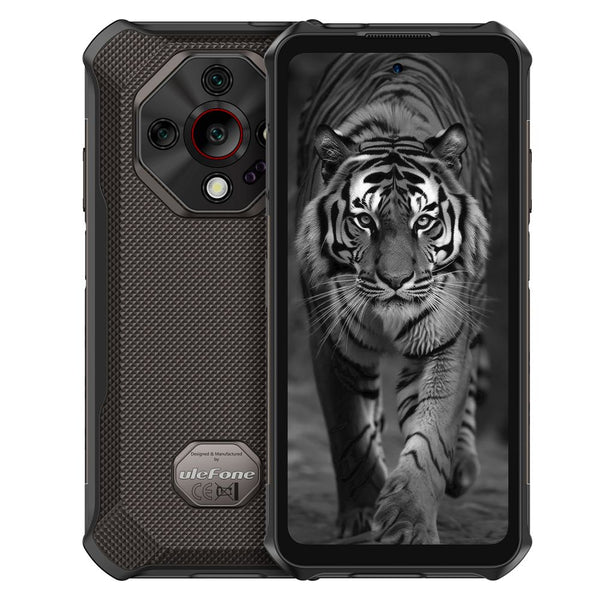
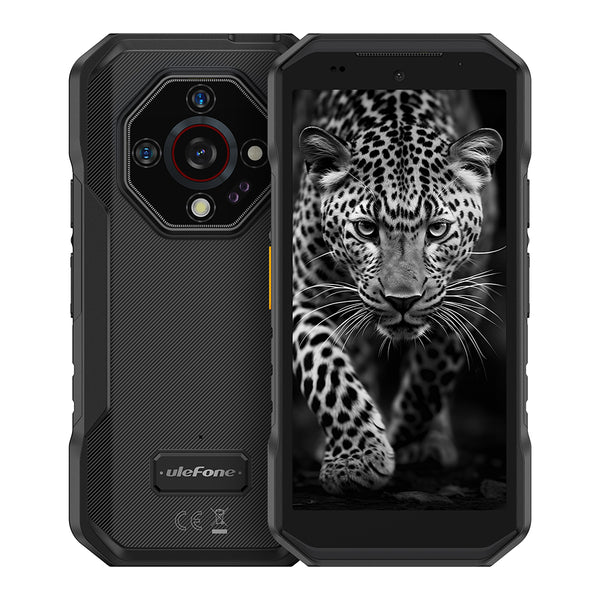
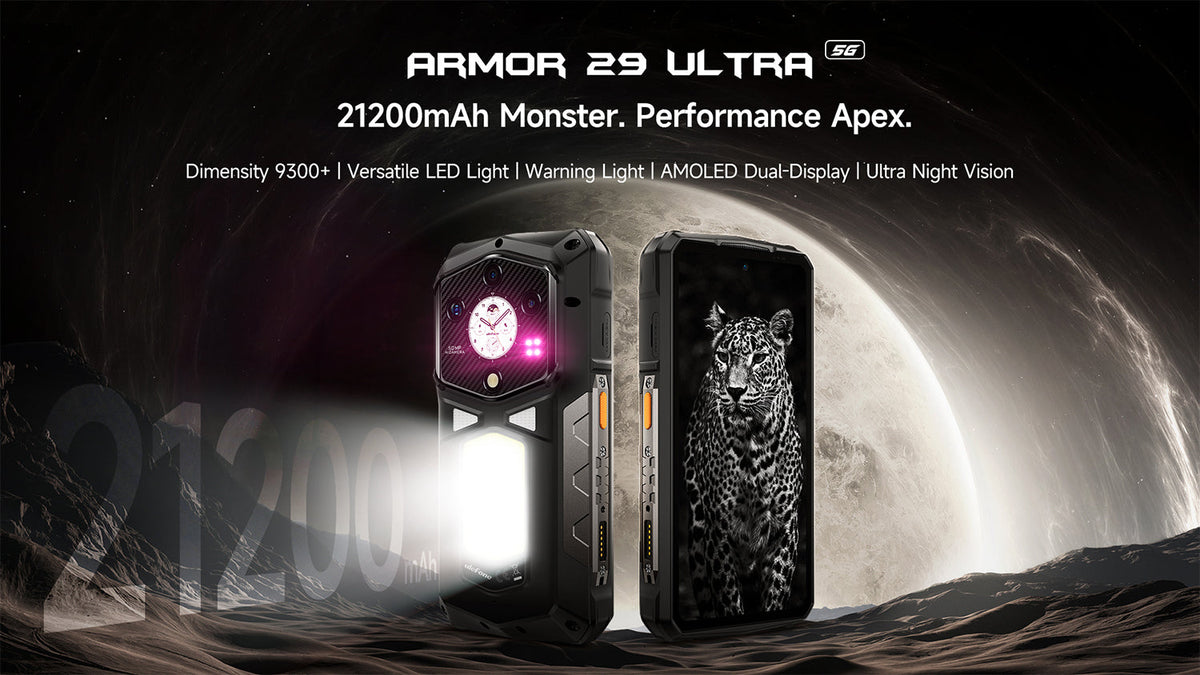
**Armor 29 Pro — the dual-screen all-rounder.** If you'd rather trade a little battery for a better camera and display, the Armor 29 Pro at $599.99 is the outdoor smart phone to take. It's the lighter of the two at 688g, with a 21,200mAh battery and 120W flash charging — a short stop at a gas station adds real runtime before you head back out. The 6.67-inch AMOLED screen hits 2,200 nits, readable in full sun, and the 1.04-inch rear sub-display shows notifications, music controls, and quick stats without pulling the phone out. The camera setup is the reason many people choose it: a large 1/1.31-inch 50MP main sensor with a 64MP night-vision camera and a 50MP ultra-wide. IP68/IP69K and MIL-STD-810H keep it safe through rain, dust, and drops.
Common Questions, Straight Answers
**Is an outdoor phone just a normal phone in a case?** No — a real outdoor smart phone is built differently: armored corners, raised bezels, and batteries two to five times the size of a normal phone. A case protects a phone that was never built for the weather; a rugged outdoor phone starts with that as the design.
**How long does the battery last out there?** With 21,000mAh to 25,500mAh, you're measuring in days of normal use, and 66W or 120W charging means a decent top-up during a pit stop. Nobody should promise exact days — screen-on time and signal strength change everything — but the pattern is simple: these phones outlast the trip, not the day.
**Can I use two SIMs for travel?** Both Ulefone models support dual Nano SIM, which is exactly what you want abroad — a local data SIM plus your home number in the same phone. Both slots are physical cards, so plan around them before you travel.
**Are they too heavy to carry hiking?** They're heavier than a slim flagship — that's where the battery lives. The Armor 29 Pro is the lighter pick at 688g; most people adjust within a day, and the trade is a phone that survives rocks, weather, and drops instead of one that needs protecting.
The Bottom Line
The right outdoor phone does four jobs: it powers your trip, lights your campsite, captures the dark, and survives the environment. The Armor 33 covers power and light at a price that's hard to beat, and the Armor 29 Pro adds the better camera and the dual-screen setup. For anyone whose phone is part of the gear list rather than a fragile accessory, that's the upgrade that sticks.


Laisser un commentaire
Tous les commentaires sont modérés avant d'être publiés.
Ce site est protégé par hCaptcha, et la Politique de confidentialité et les Conditions de service de hCaptcha s’appliquent.